SUBSCRIBE What Part of the Brain Controls Emotions? Medically reviewed by Sachin S. Kapur, M.D., M.S. — Written by Jill Seladi-Schulman, Ph.D. — Updated on July 23, 2018 The limbic system Fear Anger Happiness Love Bottom line Overview The brain is a very complex organ. It controls and coordinates everything from the movement of your fingers to your heart rate. The brain also plays a crucial role in how you control and process your emotions. Experts still have a lot of questions about the brain’s role in a range of emotions, but they’ve pinpointed the origins of some common ones, including fear, anger, happiness, and love. Read on...
Two Patients With Macular Degeneration Get Artificial Retinas
LYON, France — A 72-year-old woman with dry age-related macular degeneration (AMD) was the first patient to receive an artificial retina implant as part of the multicenter PRIMAvera clinical trial, which is looking at the safety and efficacy of the PRIMA system. “Her vision was severely impaired by this condition. We used the ETDRS chart to assess her visual acuity, as this is the current method in ophthalmology. She was able to read only nine letters,” said Laurent Kodjikian, MD, PhD, from Hôpital de la Croix-Rousse in Lyon, who is a former president of the French Society of Ophthalmology. To put that in perspective, a person with normal vision...

MERRY CHRISTMAS TO YOU FROM ALL OF US AT THE EYE CLINIC
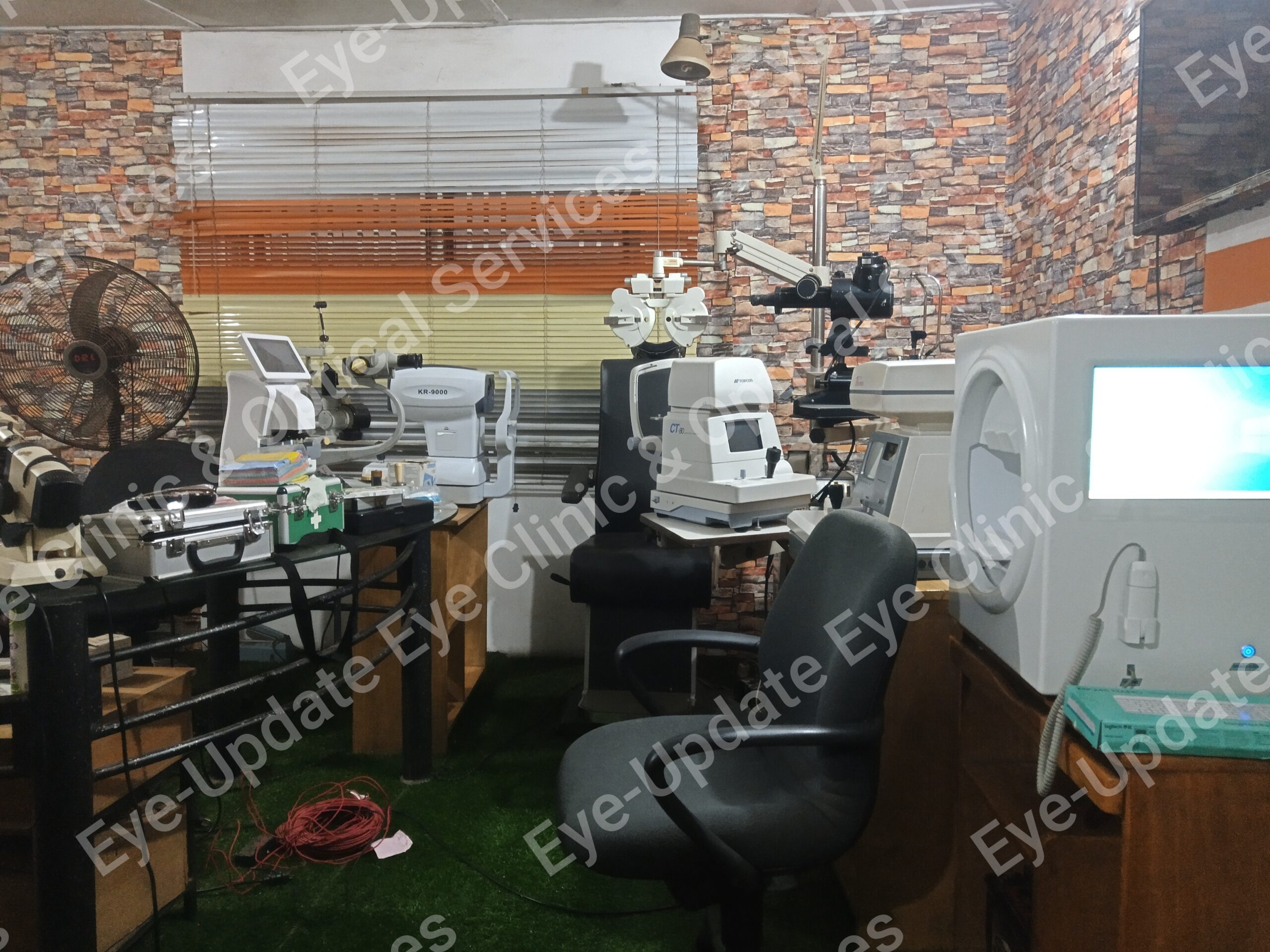
You are greatly remembered at this special season. May your life be continually filled by the love and joy of christmas. And may God continue to keep and bless you abundantly Eyeupdate Eye-clinic & Optical Supplies, 01, Ajuwon bus stop, Akute/Ajuwon Road, Ajuwon (beside BPNL/MRS Filling station).Tel: 08107531046, 08034971582
Toxoplasmosis
Toxoplasmosis is an infection caused by a parasite known as Toxoplasma gondii (T. gondii). This single-celled organism is commonly found throughout the world and tends to infect birds and mammals. The parasite forms egg-like structures called oocysts. These must be ingested by mouth, which means the infection cannot be transferred from person to person. Humans become infected with the toxoplasmosis parasite through contact with infected animal faeces (poo). Cats are the main hosts. They acquire T. gondii from eating infected rodents or birds and then may pass the infection to their human handlers. Another way of catching this infection is touching or eating raw...
Pterygium – Surgical Approach
Recurrence is your worst enemy. Here, a surgeon discusses ways to avoid it and what to do if the pterygium comes back. It’s best to approach pterygium surgery with the goal of reducing the chances of recurrence at all costs. While most pterygia are asymptomatic and regarded as garden variety lesions, they become serious problems if they recur after removal. These cases most certainly warrant a subspecialist evaluation. In this article, I’ll discuss some surgical approaches to pterygium, with particular emphasis on recurrent pterygium. At the Outset When a patient presents with a pterygium, the first thing to decide is...
What is a chalazion? Identification and treatment
A chalazion is a small, slow-growing lump or cyst that develops within the eyelid. They are not usually painful and rarely last longer than a few weeks. A chalazion can develop when a meibomian gland at the edge of an eyelid becomes blocked or inflamed. These glands produce oil that lubricates the surface of the eye. In this article, we look at the symptoms of a chalazion and the differences between a chalazion and a stye. We also describe causes, home treatment, when to see a doctor, surgery, and prevention. Symptoms In the early stages, a chalazion appears as a...
Eye care and safety
Your eyes are an important part of your health. Most people rely on their eyes to see and make sense of the world around them. But some eye diseases can lead to vision loss, so it is important to identify and treat eye diseases as early as possible. You should get your eyes checked as often as your health care provider recommends it, or if you have any new vision problems. And just as it is important to keep your body healthy, you also need to keep your eyes healthy. Eye Care Tips There are things you can do to help keep your...

Computer Vision Problems
Computer vision problems or Digital eye strain is a group of eye and vision problems. The problems can include eyes that itch and tear, and are dry and red. Your eyes may feel tired or uncomfortable. You may not be able to focus normally. These problems are caused by lots of computer or digital device use. Using e-readers and smartphones may also cause these problems. These problems have been increasing in frequency over the past few decades. Many people have some symptoms if they use a computer or digital device for long periods. Most computer or digital device users have symptoms at least some of the...
Uveitis
Overview Uveitis is a form of eye inflammation. It affects the middle layer of tissue in the eye wall (uvea). Uveitis (u-vee-I-tis) warning signs often come on suddenly and get worse quickly. They include eye redness, pain and blurred vision. The condition can affect one or both eyes, and it can affect people of all ages, even children. Possible causes of uveitis are infection, injury, or an autoimmune or inflammatory disease. Many times a cause can’t be identified. Uveitis can be serious, leading to permanent vision loss. Early diagnosis and treatment are important to prevent complications and preserve your vision....
Prosthetic Contact Lenses
Prosthetic contact lenses are prescribed to mask flaws and improve the appearance of an eye disfigured from a birth defect, trauma, or eye disease. If certain structures of the injured or disfigured eye also fail to function properly, special prosthetic lenses can be designed to block excess light from reaching the back of the eye to reduce glare and increase comfort. Your eye care practitioner can match prosthetic contact lenses to the appearance of a healthy eye by using a pre-made trial set or by ordering custom-painted contact lenses. Like regular contact lenses, prosthetic contacts can be made of gas permeable or soft lens materials. And most prosthetic lenses can be...